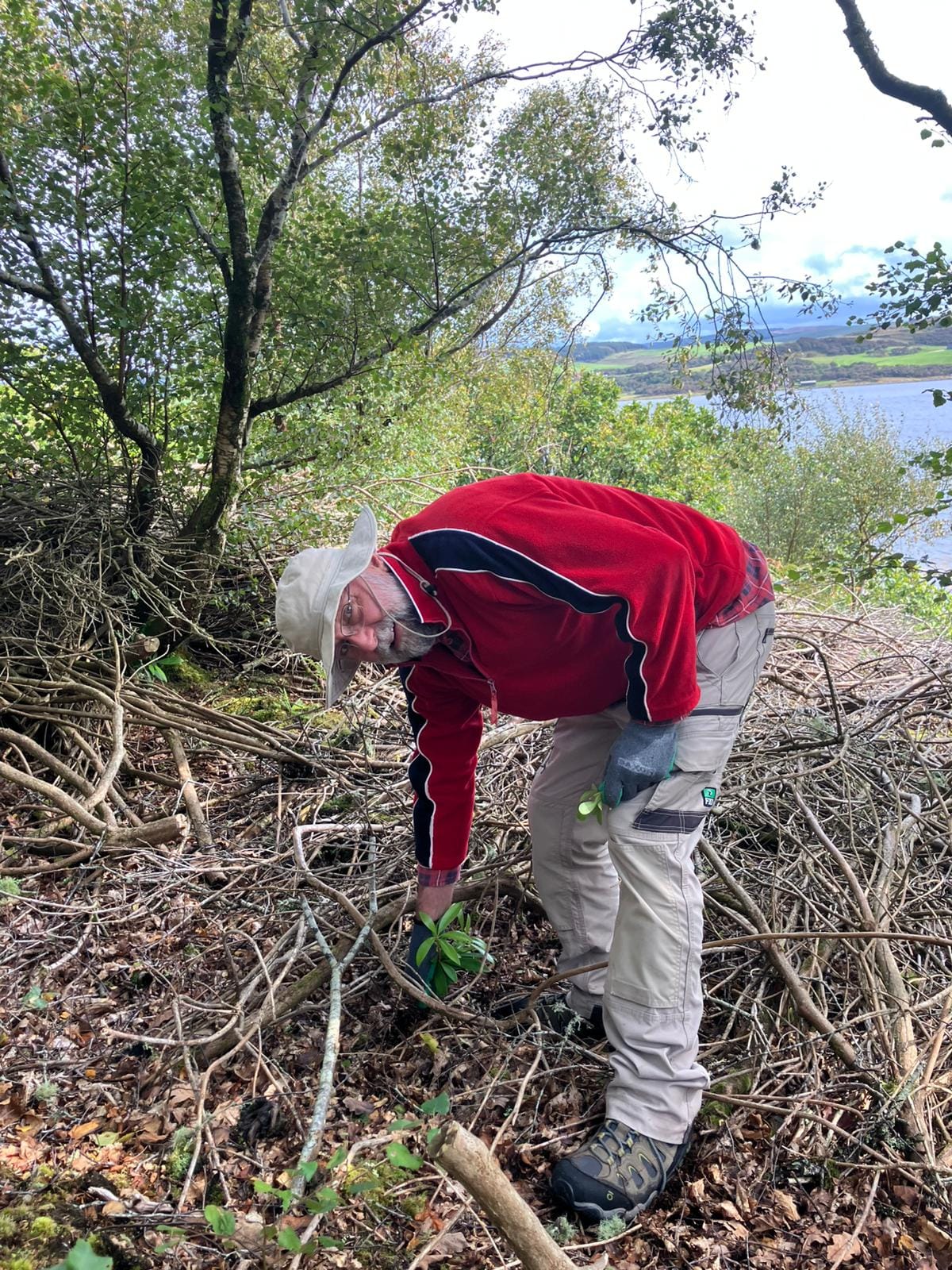
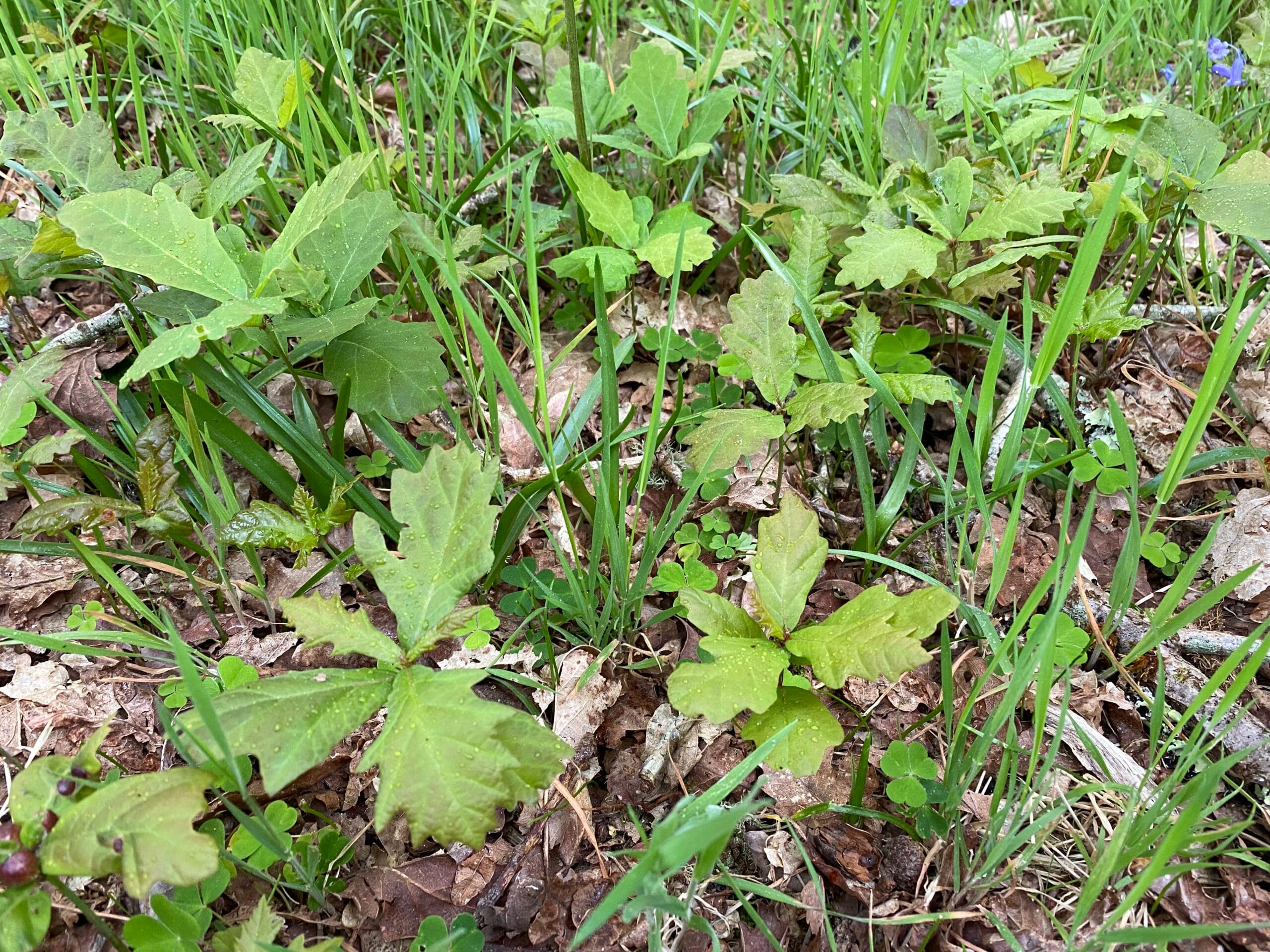
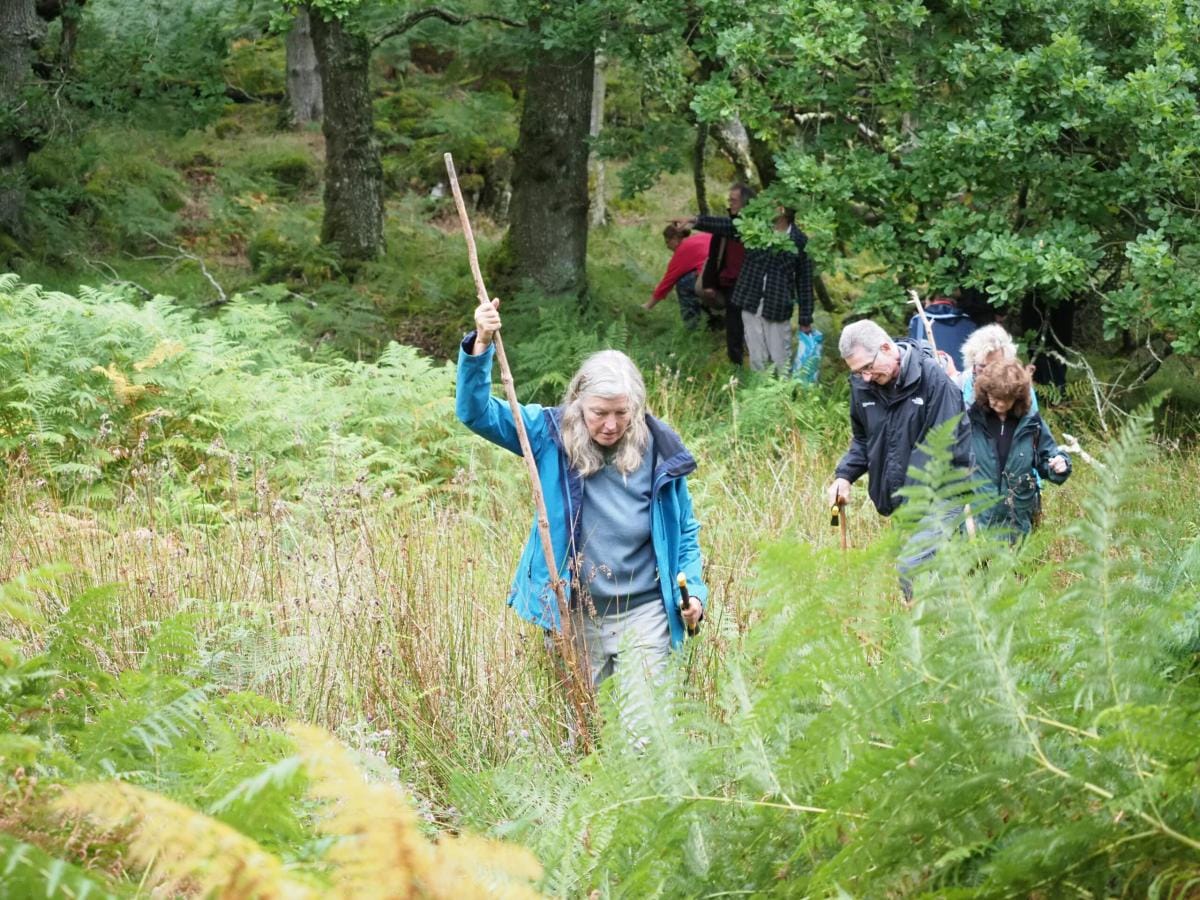
Ferry Wood is an Atlantic oak wood, sessile oak (Quercus Petraea) being the dominant tree species with trees of varying ages from tiny saplings to veteran trees. Thanks to the damp oceanic climate the trees, surrounding rocks and boulders support a rich flora of lichens and bryophytes,
Lichens are composite organisms made up of a fungal partner and a photosynthetic partner usually an alga but sometimes cyanobacterium. They play a crucial role in the ecosystem as a habitat and food source for wildlife.
Some lichens are indicator species for Temperate Rainforest .and some of these species are found in Ferry wood.
The various Lobaria species are known as lungworts because their physical shape resembles a lung.
They have a three-part symbiosis: – a fungus which provides the rigid structure, an alga which provides energy from the sun through photosynthesis (it needs moisture to photosynthesise and this gives the green colour when the lichen is damp) and finally a cyanobacteria (formerly known as blue green algae. ) which also gains energy from the sum through photosynthesis and can fix nitrogen from the atmosphere.
Lobaria lichens are epiphytes using the tree as a support but not taking any nutrients from it .
Lobaria Pulmonaria commonly known as Tree Lungwort
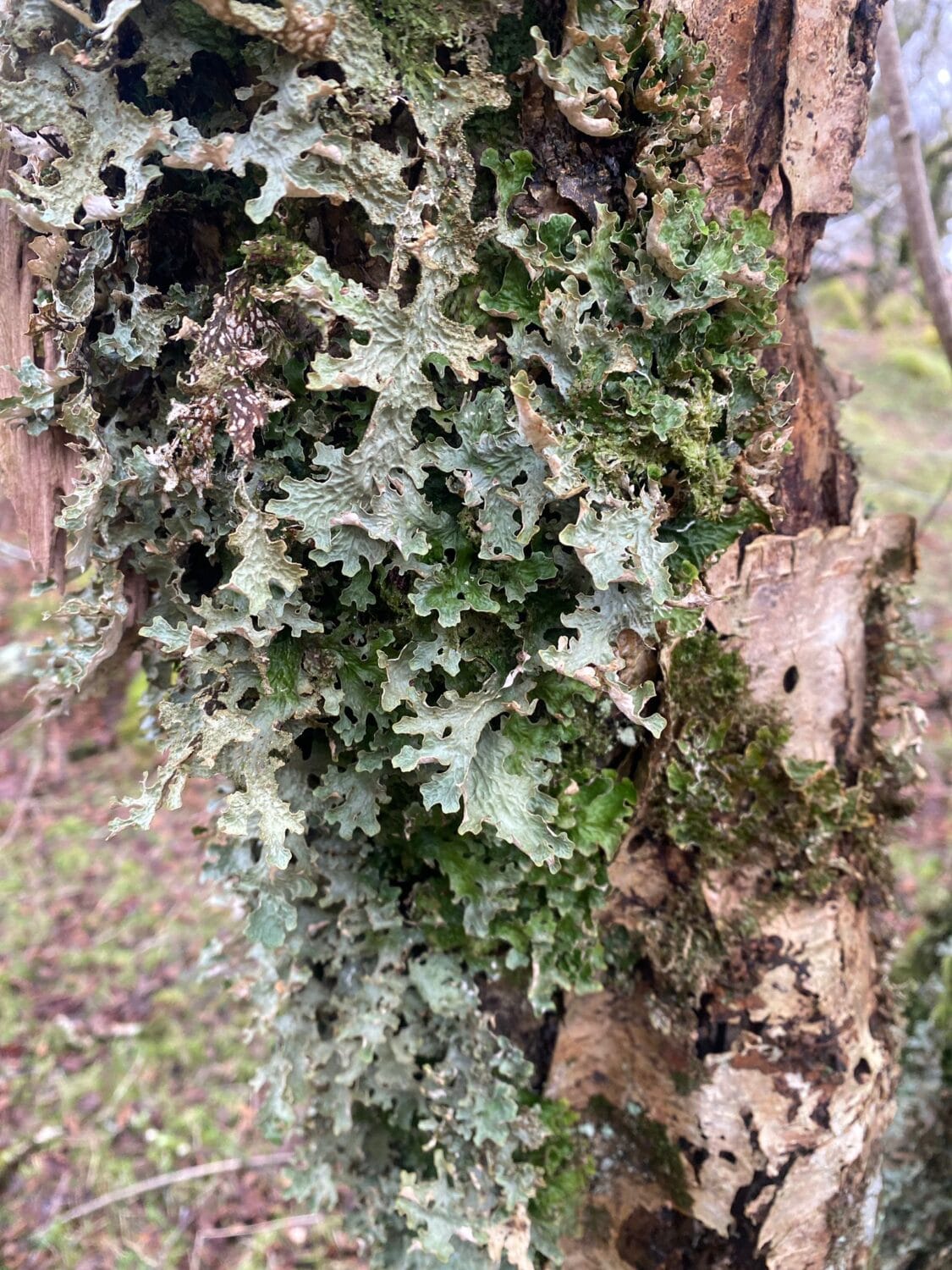
Tree lungwort has long been used medically as its lobes resemble lung tissue ( Doctrine of Signatures) Culpeper in England and also in Indian herbal medecine . It has also been used to produce an orange dye and as an ingredient for brewing.
Lobaria virens ( Ricasolia virens )

A large lichen dull grey or yellow green when dry but bright grass green when wet, giving it the popular name of “dragon skin”. Well developed thalli have dark brown coral-like outgrowths (cephalodia ) on the surface which are cyanobacteria ( Nostoc sp) and can fix nitrogen.
Lobaria amplissima

Pale creamy grey when dry green when wet forming large patches . Well developed thalli have It has dark brown coral like outgrowths (cephalodia ) on its surface which are cyanobacteria and can fix nitrogen. This is the rarest of the four lobaria species.
Lobaria scrobiculata Textured lungwort

We have not found this is ferry wood but it occurs in a number of neighbouring woods mainly on hazel. This is a lot rarer than Lobaria pulmonaria and is a true indicator of temperate rainforest.