We’ve been looking after Ferry Wood for nearly eight years and have learned so much about deer, Sheep, Rhododendron, Bracken, Oak, Birch, lower and flowering plants…the list goes on.
The wood is less than 40 acres in size, but is extremely complex, due to a number of reasons. One is that most of it is ancient woodland (though some is recent – we will compare and contrast in future posts) and therefore has had time to evolve undisturbed.
Another is that the topography is very varied, resulting in hills, saddle, gullies, ravines, terraces, ledges, cliffs and many slopes of differing gradients. This is the consequence of varying bands of metamorphosed schist rocks which have eroded at different rates due mostly to recent glaciation, plus sea level changes. This has resulted in a mosaic of different habitats, often highlighted by a particular plant species.
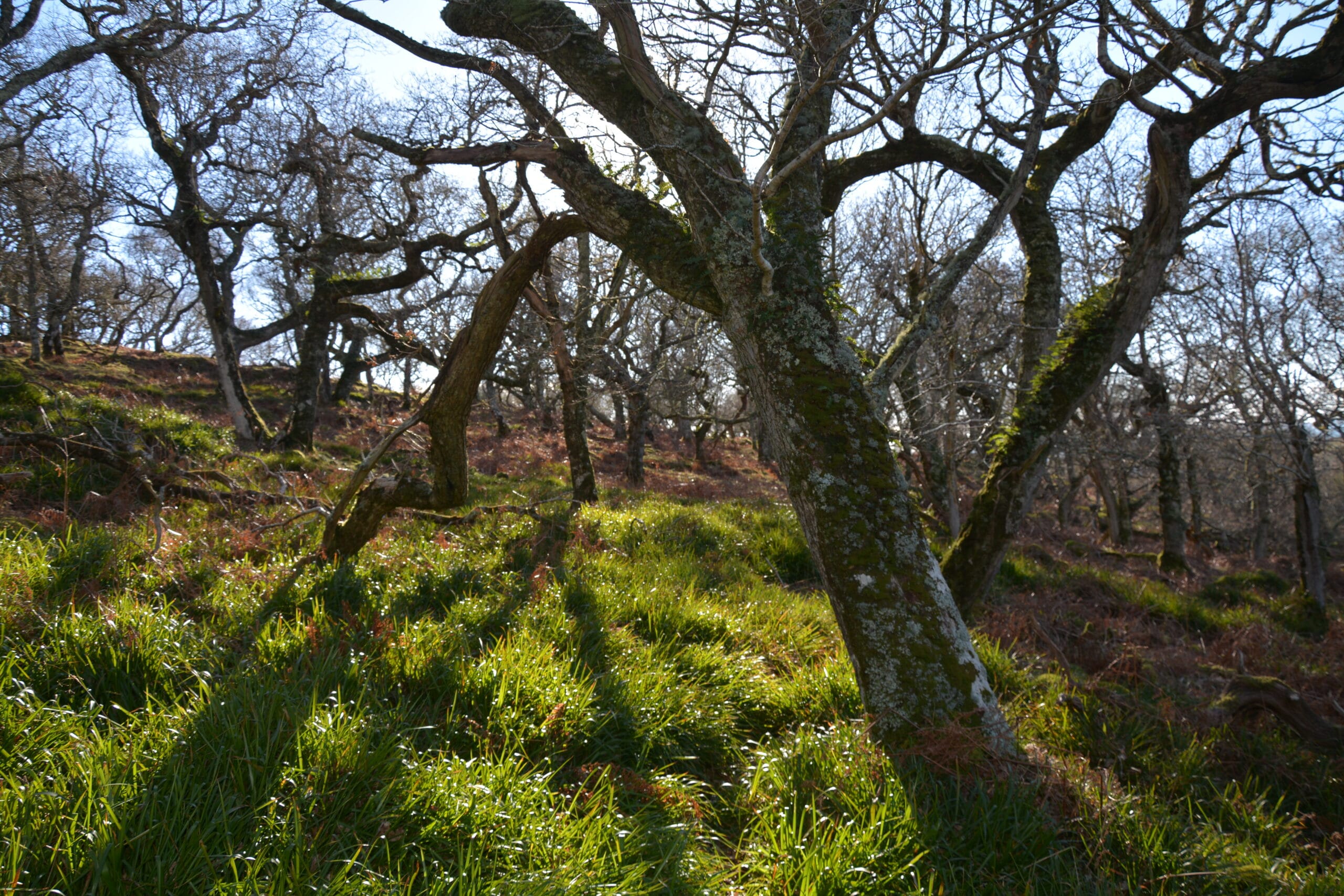
The photograph above was taken in February, and shows a large patch of woodrush. At this time of the year it shows up bright green in contrast to the bracken. With its abundance of tough leaves it dominates the ground, not allowing anything else in (though occasionally a rhododendron seedling takes root and grows a long and thin stem to clear the tufts).
Why is dominant in some areas, and absent in others? The Ph of the soil probably has something to do with it, as this varies across the site. Also past grazing pressures, as this is a plant that will tolerate grazing.
Whatever the reason, the woodrush is just one of hundreds of examples of the dynamic complexity and variety of Ferry Wood.